
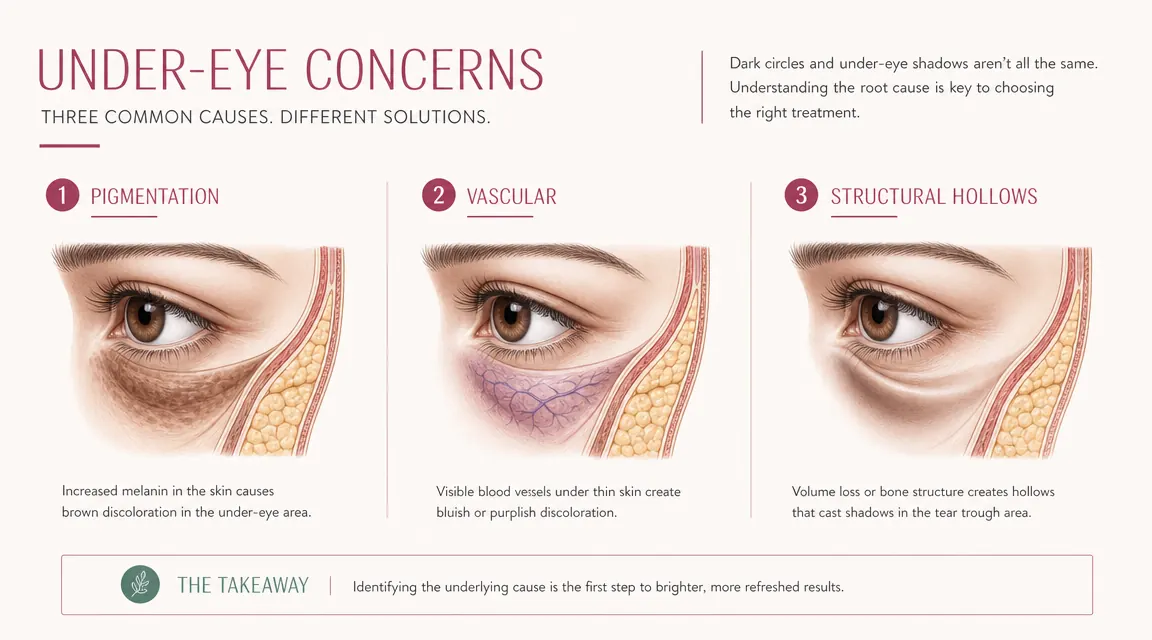
I spent three years behind an esthetics counter telling clients the same thing I had to learn the hard way myself: dark circles are not all the same problem. Some are brown and pigmented. Some are blue-purple and vascular. Some are not even actual darkness at all, but a structural hollow that casts a shadow regardless of what you put on it. That distinction matters because the fix for one type does almost nothing for the other two. If you have spent money on eye creams and seen no change whatsoever, this is usually why.
This guide walks through the three causes of dark circles, which lifestyle changes move the needle for all of them, and where a targeted retinol eye cream like the Neutrogena Rapid Wrinkle Repair fits into a realistic routine. No promises of overnight fixes. What I can offer is a clear path grounded in how skin actually works and honest about what topical products cannot do.
Already know you want a retinol eye cream? This is the one worth starting with.
The Neutrogena Rapid Wrinkle Repair Retinol Eye Cream has 24,558 Amazon ratings at 4.4 stars. It uses accelerated retinol SA to support skin cell turnover and build collagen in the thin skin under the eye. For pigmentation-based circles, it is one of the more affordable options that actually contains enough active ingredient to do something. Check today's price before you continue reading.
Amazon Check Today's Price on Amazon →Step 1: Identify Which Type of Dark Circles You Have
Before anything else, you need to know what you are dealing with. Pull up a mirror in good daylight and press your fingertip gently into the darkened area under your eye. If the color lightens noticeably under pressure, you are probably looking at vascular circles, meaning blood showing through thin skin. If the color stays the same under pressure, you are likely dealing with pigmentation. If neither press test changes things much and the shadow actually deepens when you look downward, the issue may be structural, a tear trough hollow that creates shadow regardless of skin tone or product applied.
Pigmentation-based circles tend to appear as a brownish or grayish cast, often more noticeable in people with deeper skin tones. Melanin overproduction from sun exposure, friction from rubbing, or post-inflammatory changes are common drivers. Vascular circles look bluer or more purple, especially in the inner corner, and are more common in people with fair, thin skin where the orbicularis oculi muscle and blood vessels sit close to the surface. Structural circles are shadows caused by volume loss in the tear trough or by prominent bone structure, and they have nothing to do with skin condition at all.
Eye cream helps most with pigmentation-based circles. A retinol formula may also help thin-skin vascular circles over time by supporting collagen density in the dermis, making underlying vessels slightly less visible. For structural circles, filler or natural facial fat redistribution are the main levers. No topical product rearranges bone structure or replaces lost volume, and any claim to the contrary is not accurate.
Step 2: Address the Lifestyle Factors That Make All Three Types Worse
Regardless of which type you have, several habits make all of them look significantly worse. Sleep deprivation increases blood pooling in the periorbital area and decreases vasomotor tone, so vascular circles become more visible. It also increases fluid retention, which can make the area look puffier and cast a deeper shadow into any existing hollow. Seven to nine hours is the standard recommendation, and it matters more than most topical treatments for most people.
Salt intake affects under-eye puffiness more than many people realize. A high-sodium meal the night before can drive fluid into the loose tissue under the eye by morning. Alcohol has a similar dehydrating and then rebound-fluid-retention effect. Allergens, whether seasonal or contact-based from products used near your eyes, cause histamine release that creates the classic allergic shiner, a dusky arc under both eyes that often eases when the allergen is identified and removed.
Sun protection matters significantly if your circles are pigmentation-based. UV exposure drives melanin production, and the under-eye area is among the most sun-exposed skin on the face because of its upward-facing angle. Wearing a broad-spectrum SPF every morning and sunglasses when outdoors does more cumulative work for pigmentation circles than almost any other single habit. It also matters if you are using any retinol product, since retinol increases photosensitivity.
I ask every client with dark circles the same two questions first: how much sleep are you getting and what does your salt intake look like? Half the time, those two answers explain most of what I am seeing.
Step 3: Build an Evening Routine That Supports Skin Renewal Under the Eye
The under-eye area has some of the thinnest skin on the face, which means it is both more reactive and slower to show visible results from active ingredients than thicker areas. Evening is the right time for your most targeted products here, because skin goes into repair mode overnight and you are not competing with SPF or makeup application for the next several hours.
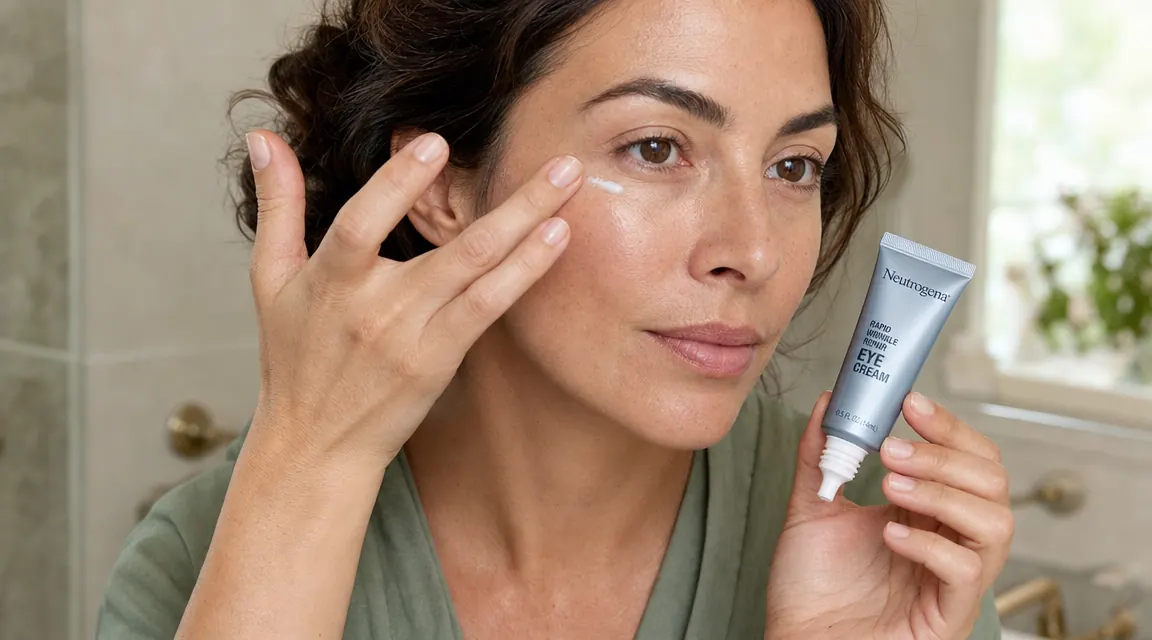
Start with a gentle cleanse to remove sunscreen, makeup, and the day. Avoid any rubbing or tugging at the eye area during this step. Pat the skin dry gently. Then, if retinol is part of your plan, apply a very small amount to the orbital bone using your ring finger, which applies less pressure than your index or middle finger. The Neutrogena Rapid Wrinkle Repair Retinol Eye Cream is formulated for use directly in the under-eye area, which matters because not all retinol products are safe for use this close to the eyes. Its accelerated retinol SA system may support collagen production in the thin skin over time, which is useful for both pigmentation reduction and for making the skin a bit less translucent if vascular shadowing is part of the picture.
If you are new to retinol anywhere near your eyes, start every other night for the first two to three weeks. Over-application in this area tends to cause irritation that makes everything look worse. Build to nightly use once your skin has confirmed it is tolerating it well without stinging, excessive dryness, or flaking. For a full walkthrough of introducing retinol into a complete routine, the detailed guide on how to start retinol without irritation covers the sequencing step by step.

Step 3a: Add a Vitamin C Product if Pigmentation Is Your Primary Concern
If pigmentation circles are the main issue, vitamin C is one of the more well-studied ingredients for supporting a more even tone. It works differently from retinol: rather than driving cell turnover, it inhibits tyrosinase activity, which is part of the melanin synthesis pathway. A stabilized vitamin C serum applied in the morning before SPF pairs well with a retinol product used the night before. The two complement each other without conflict since they are used at different times of day.
Look for ascorbic acid or a phosphate derivative at a concentration between 10 and 20 percent. Above 20 percent tends to cause irritation without proportional gain. Store the product away from heat and direct light, which degrade vitamin C quickly. If your serum turns deep orange or amber before the bottle is finished, the active ingredient has oxidized and the formula is no longer doing its intended job.

Step 4: Protect Your Progress Every Single Morning
Everything you build at night can be partially undone by unprotected UV exposure the next day. This is especially true for pigmentation circles, where ongoing sun exposure is one of the main drivers keeping them dark. Using retinol also increases your skin's photosensitivity, making consistent morning SPF use non-negotiable rather than optional.
Apply a broad-spectrum SPF 30 or higher to your full face each morning, including the orbital area. Most people skip sunscreen on their eyelids and just below the eyes because they worry about irritation or puffiness. A well-formulated face sunscreen applied thinly and allowed to settle before getting close to the eye line is generally tolerated well. Sunglasses with UV-blocking lenses provide an additional layer for outdoor time.
If you use concealer daily over the under-eye area, think about how much friction the application and blending involves. Repeated tugging at this thin, sensitive skin is a less-discussed contributor to melanin stimulation. Choosing a formula that blends with minimal pressure and does not require frequent touch-ups during the day reduces that mechanical friction over time.
Step 5: Set Realistic Expectations and Measure Progress Slowly
Pigmentation under the eye is among the slower skin concerns to shift noticeably. Retinol products typically show meaningful change in skin texture and overall tone after eight to twelve weeks of consistent nightly use. Vitamin C results for pigmentation tend to become visible around the eight-week mark if the product has stayed stable and the routine has been consistent. Vascular circles may respond more slowly still, since the mechanism is building collagen thickness rather than fading a pigment.
Structural circles will not respond to any topical product. If your under-eye area looks hollow or heavily shadowed regardless of sleep quality, hydration, or a full skincare routine, a consultation with a board-certified dermatologist about tear trough filler is worth considering. It is not a minor step, but it is the intervention that actually addresses that root cause rather than working around it.
For those pursuing the topical approach, the Neutrogena Rapid Wrinkle Repair Retinol Eye Cream is a sensible starting point that does not require a high price commitment. At over 24,000 ratings and a 4.4-star average, it has a meaningful real-world track record. The full three-month review goes through what changed week by week and who tended to see the best results. It is worth reading alongside this guide if you are deciding whether retinol in the eye area fits your specific situation.
What Else Helps
Cold compresses in the morning reduce puffiness by temporarily constricting blood vessels near the surface of the skin. Chilled spoons, a gel eye mask kept in the fridge, or cold water splashed directly onto the closed eyes all accomplish this and cost nothing. The effect is temporary, lasting an hour or two at most, but it can make a real cosmetic difference before an important morning. Sleeping on your back with your head slightly elevated helps fluid drain from the under-eye area overnight instead of pooling there. A second pillow is enough to change the drainage angle for most people. Staying well-hydrated throughout the day supports overall skin plumpness and may slightly reduce the hollowed, shadowed appearance that makes any existing darkness look more pronounced. Aim for consistent daily water intake rather than trying to compensate for dehydration in one sitting.
If your circles are pigment-based, this retinol eye cream is a practical first step.
The Neutrogena Rapid Wrinkle Repair Retinol Eye Cream uses a concentrated retinol SA formula in a size designed for the delicate under-eye area. It has more than 24,000 Amazon ratings. Most reviewers using it consistently for eight or more weeks report visible improvement in skin texture and a gradual softening of discoloration. Check today's price to see where it lands.
Amazon Check Today's Price on Amazon →