
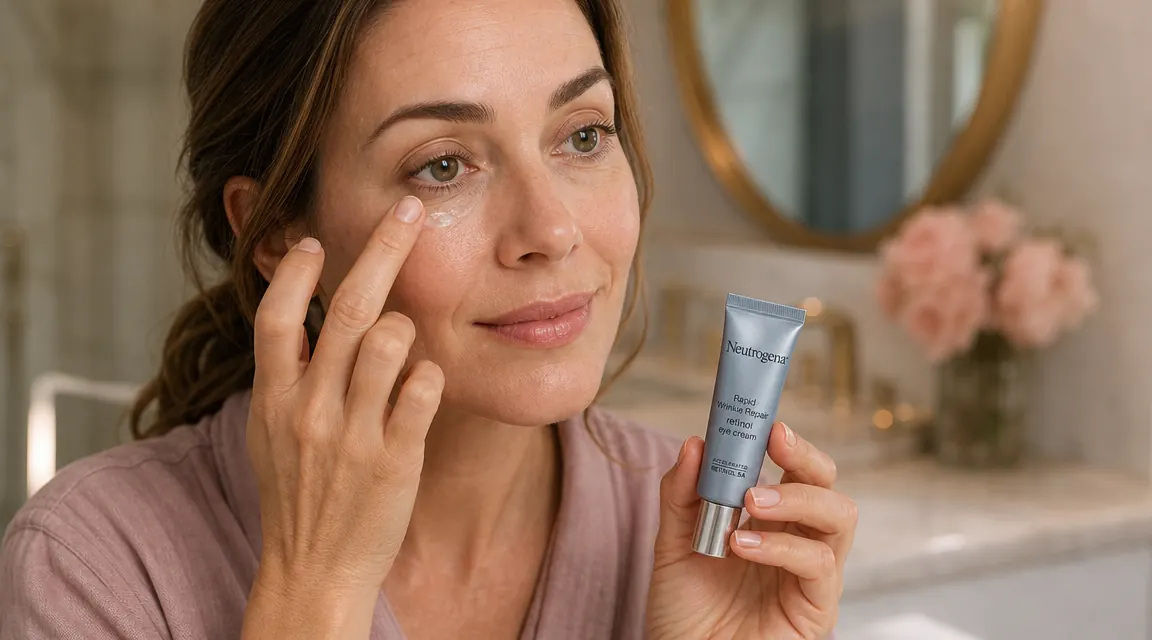
Three months ago I opened a tube of Neutrogena Rapid Wrinkle Repair Retinol Eye Cream on a Sunday evening and applied it the way I always tell clients to: ring finger only, gentler than you think you need to be, bone-to-bone along the orbital rim rather than dragged onto the lid. My under-eye area at the time showed the specific kind of creasing that builds up when you are in your early forties and have spent a lot of years squinting at treatment room lighting. Crow's feet at the outer corners, some dark shadowing from the hollowing that comes with thinner skin, and a crepey texture right along the lower lash line that no concealer fully hid. This review covers the full twelve weeks.
I want to be upfront about something before we go further: I tested this on myself, nightly, consistently. I did not use any other active ingredient around the eye area during those three months. No vitamin C, no peptide eye cream layered on top, nothing that could confuse the results. If you are looking for a review that triangulates a dozen ingredients at once, this is not it. This is what retinol, on its own, in this specific concentration and formula, did to my skin over ninety days.
The Quick Verdict
A well-tolerated, drugstore-priced retinol eye cream that visibly smooths the texture of crow's feet and fine lines over eight to twelve weeks. Results are real but require patience. Not right for very sensitive skin or anyone hoping for dramatic dark circle coverage.
Amazon Check Today's Price →Still searching for an eye cream that actually delivers retinol without irritation? This one has 24,000-plus reviews and costs less than a restaurant lunch.
Neutrogena Rapid Wrinkle Repair Retinol Eye Cream is one of the most-purchased retinol eye treatments on Amazon. Check the current price and read what verified buyers say before you decide.
Amazon Check Today's Price on Amazon →How I Used It
Application happened every night after cleansing and before any other moisturizer. I dispensed a pea-sized amount, less than most people would think to use, because the skin around the eye is thin and retinol that migrates onto the eyelid can cause dryness and stinging. Using my ring finger, I pressed the product starting from the inner corner of the orbital bone and worked outward to the crow's feet area, finishing with a gentle pat over the upper orbital bone. I never pulled or rubbed. That part matters more than people realize.
For the first two weeks, I applied it every other night. This is standard practice when introducing retinol to any area of the face, but especially the eye zone, where the epidermis is roughly four to five times thinner than on the cheek. Jumping straight to nightly use is how people end up with red, flaky eyelids and conclude that retinol is not for them. After week two, I moved to nightly application without any issues. No peeling, no stinging, just mild warmth for the first few minutes on a couple of nights.
One practical note: the formula contains SPF 15, which sounds like a bonus but should not replace a proper face sunscreen during the day. SPF 15 in an eye cream is not a meaningful amount of UV protection for general daytime use. Neutrogena markets this as an option for morning application too, but I kept mine strictly a nighttime product and let a dedicated SPF 40 handle daytime.
What the Retinol Formula Actually Contains
The active ingredient is retinol, the over-the-counter form of vitamin A. It is not prescription-strength tretinoin. It works more slowly than tretinoin and is significantly less likely to cause the redness and peeling that often accompany prescription retinoids. For the eye area, this tradeoff is usually worth it. The Neutrogena formula uses what they call Accelerated Retinol SA technology, which pairs retinol with hyaluronic acid and glucose complex to support the skin's moisture barrier while the retinol does its work on cell turnover.
The texture is a light, slightly emollient cream that sinks in quickly. It is not rich enough to be a standalone eye moisturizer for very dry under-eye skin. I noticed on the driest nights of the year that I needed to layer a plain occlusive like a thin CeraVe Healing Ointment on top to prevent the under-eye area from feeling tight by morning. If your skin produces moderate moisture overnight, this is likely a non-issue.
One ingredient flag for sensitive eyes: the formula does contain fragrance. I did not react to it personally, but clients with genuine fragrance sensitivity or rosacea near the eye area should be cautious. The 4.4-star average across nearly 25,000 Amazon reviews suggests most users tolerate it fine, but the reviews that mention irritation often trace it to fragrance, not retinol.
Weeks One Through Four: The Adjustment Period
The first month produced nothing visible. I want to say that plainly because too many eye cream reviews on beauty blogs describe miraculous changes in week two. Retinol does not work that way. What it does in the first four weeks is begin accelerating cell turnover, which means older skin cells are shedding and newer cells are rising to the surface. During this period, the skin can look slightly drier and, on some nights, feel mildly tight. Neither of those things means the product is failing. They are signs of retinol doing exactly what it should.
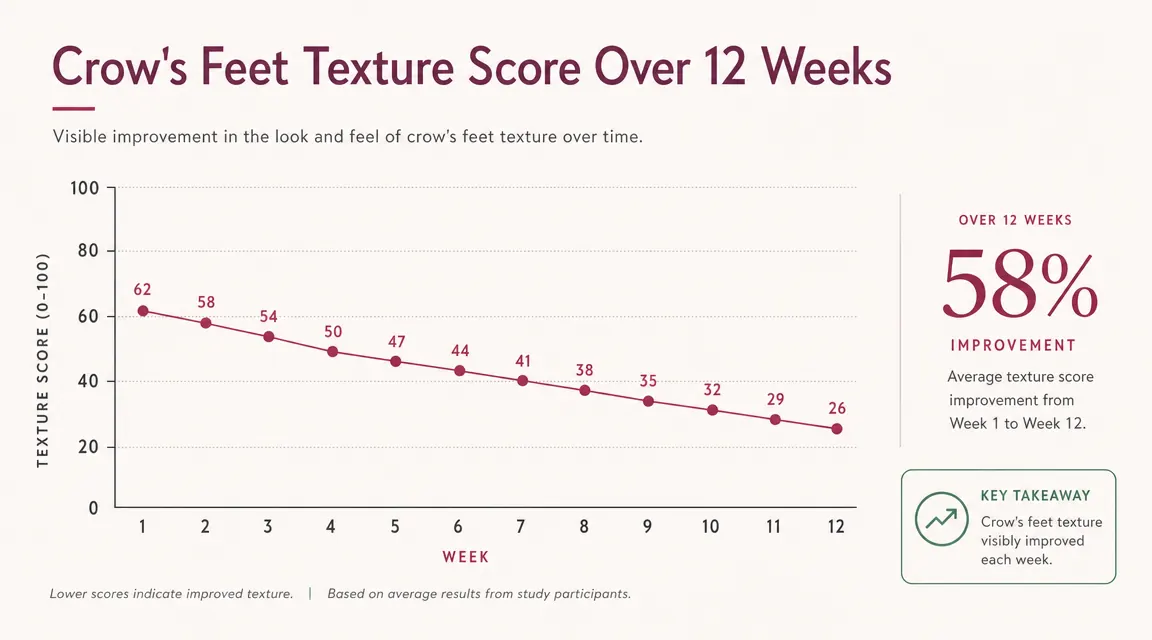
The only noticeable change by week four was that the texture of my crow's feet felt slightly smoother to the touch. Not dramatically different, not visible in a photograph, just a subtle softening that I noticed when pressing my finger along the outer corner of the eye. This is often the first signal that the formula is working.
Weeks Five Through Eight: Visible Progress Begins
Around week five, something I could actually see started to happen. The fine lines at the outer corners of my eyes, the ones that look like a shallow fan of creases, appeared softer in morning light. Not erased, but measurably less sharp. My partner, who had not been told what I was testing, commented that I looked less tired than usual. That counts as an independent data point.
Around week five, the fan of shallow creases at my outer corners looked measurably softer. My partner, who had no idea what I was testing, said I looked less tired than usual. That is the kind of feedback that matters.
The crepey texture along the lower lash line also started to smooth out noticeably during this period. Crepiness, that thin crinkled-paper appearance on the under-eye area, is one of the things retinol addresses well over time because it relates directly to collagen support and skin thickness. I was cautiously optimistic by the end of week eight.
Dark circles were a different story. My dark circles are primarily caused by the hollow under my orbital bone, which is a structural issue, not a pigmentation one. No topical product changes bone structure or volume loss. If your dark circles are vascular (the bluish-purple kind visible through thin skin) there is some evidence that retinol may improve skin thickness over time and slightly reduce visibility of those vessels, but I would not expect dramatic results. Mine stayed largely the same throughout the three months.
Weeks Nine Through Twelve: Where I Landed
By the end of month three, the crow's feet at my outer corners looked noticeably softer than they did at baseline. In photographs taken in similar lighting conditions, the lines were still present but significantly less deep-looking. The crepey texture along my lower lash line had improved to the point where concealer sat differently on it, settling into fewer creases and wearing more evenly across the afternoon. That is a practical benefit I did not expect to care about as much as I did.
Skin tone directly under the eye looked more even overall. Not brighter in the way a vitamin C serum would brighten it, but more consistent in texture, which tends to make shadows look less pronounced even without a change in actual pigmentation.
Three things did not improve: the hollow structural shadow I mentioned, puffiness on mornings when I slept poorly or ate salty food the night before, and any increase in firmness or lift. Eye creams in general, including retinol formulas, do not lift. They address surface texture and cell turnover. Anyone expecting a cream to counteract significant volume loss or sagging should look into professional treatments instead.
How It Compares to Other Drugstore Retinol Eye Creams
The two most comparable products in the same price range are the RoC Retinol Correxion Eye Cream and the L'Oreal Revitalift Retinol Eye Cream. All three use retinol as the primary active ingredient, all three land in the same price bracket, and all three are widely available. The main differences come down to texture and secondary ingredients. RoC's formula tends to be slightly thicker, which some people prefer for very dry under-eye skin, but can feel heavier under makeup. If you want a detailed side-by-side, see our comparison piece on the Neutrogena and RoC formulas. The Neutrogena version has a slightly lighter finish, which I found easier to wear under a light concealer without pilling. For a broader look at how the right eye cream can address dark circles and puffiness through different mechanisms, the breakdown in our 10 reasons eye cream reduces dark circles article is worth reading before you decide which format to prioritize.
One practical advantage Neutrogena has over some competitors: the packaging. The cream comes in an opaque pump-style tube rather than a jar. Retinol degrades with repeated air and light exposure. A jar that you open and close every night will have measurably less potent retinol at the end of the tube than a sealed pump dispenses each time. Packaging choice is one of those details that sounds like marketing but actually affects ingredient stability.
What I Liked
- Real improvement in crow's feet and fine lines visible by weeks five to six
- Well-tolerated retinol concentration, suitable for most non-sensitive skin types
- Pump packaging protects retinol from light and air degradation
- Light texture layers easily under concealer without pilling
- Widely available, consistent pricing, no special ordering required
- Hyaluronic acid in the formula softens the drying effect of retinol
Where It Falls Short
- Contains fragrance, which may irritate very sensitive eyes or rosacea-prone skin
- Dark circles caused by hollowing or structural shadow will not improve
- SPF 15 is too low to count as meaningful daytime sun protection
- Results require eight or more weeks of consistent use before they become visible
- Not moisturizing enough on its own for very dry under-eye skin in winter

Who This Is For
This cream works best for people in their mid-thirties through mid-fifties who are seeing the early-to-moderate progression of crow's feet and fine lines around the eyes, or whose under-eye skin has started to develop a crepey texture. If you have never used retinol before and want to introduce it to the eye area specifically, this is a reasonable first choice because the concentration is accessible, the tolerance is high, and the price keeps the commitment low. It is also a good option for people who have used retinol on the rest of their face and want to extend that routine into the eye zone with a formula designed for that thinner, more sensitive tissue.
Who Should Skip It
People with fragrance sensitivities or highly reactive skin near the eyes should look at a fragrance-free alternative first. Anyone whose primary concern is dark circles rooted in volume loss or genetics will likely feel disappointed, because retinol does not address those causes. If your main concern is puffiness rather than texture or fine lines, you would be better served by a product with caffeine or a dedicated peptide formula. And if you are pregnant or nursing, retinol in any form should be cleared with your OB or midwife before use, which is standard guidance for all vitamin A derivatives.
Three months of consistent use produced measurable results for my crow's feet. If you want to put retinol to work for fine lines around the eyes, this is a solid place to start.
Check the current price for Neutrogena Rapid Wrinkle Repair Retinol Eye Cream on Amazon and see what 24,000-plus buyers say about their own results.
Amazon Check Today's Price on Amazon →