
If you have been staring at the eye cream shelf at the drugstore, trying to decide between Neutrogena Rapid Wrinkle Repair and RoC Retinol Correxion, you are not the first person to stand there longer than you planned. Both promise to address dark circles, crepey skin, and fine lines around the eyes. Both contain retinol. Both cost roughly the same amount. So what is actually different?
I spent six weeks applying each formula nightly, alternating sides during the first two weeks and then committing to Neutrogena full-time once the comparison picture became clear. My skin is combination with mild sensitivity around the orbital area. I have noticeable under-eye lines and some persistent darkness that is more structural than pigmentation. Here is what I found.
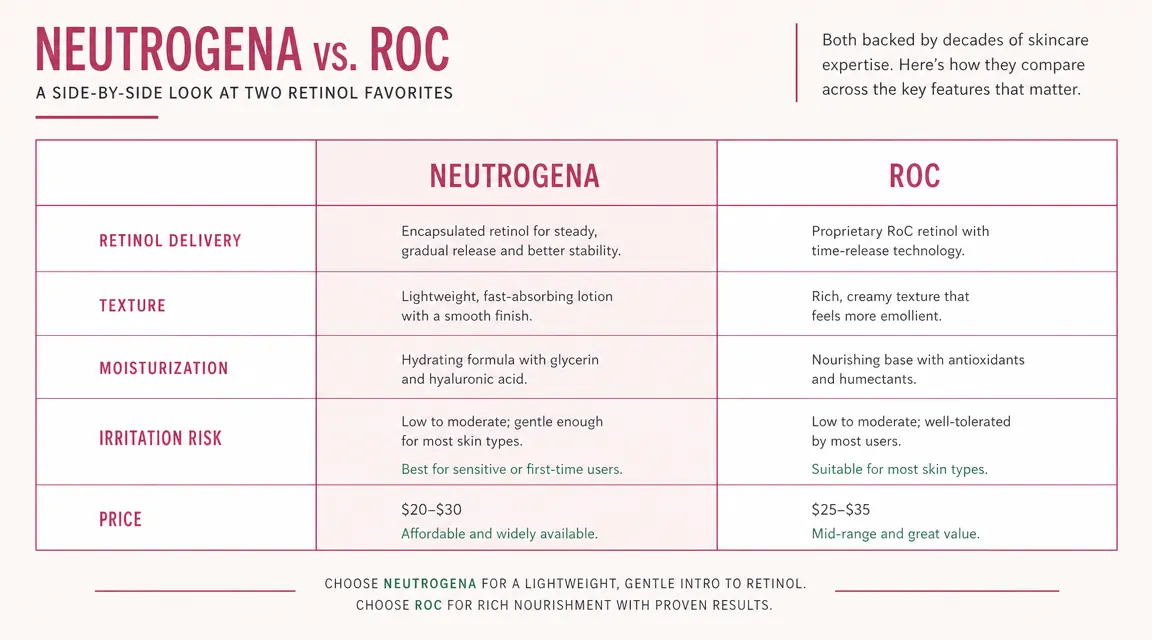
| attribute | left | right |
| attribute | left | right |
| attribute | left | right |
| attribute | left | right |
| attribute | left | right |
| attribute | left | right |
| attribute | left | right |
| attribute | left | right |
Still comparing options? Check what Neutrogena Rapid Wrinkle Repair actually costs right now.
With over 24,000 reviews and consistent reorders, the Neutrogena eye cream is the one I recommend to most people. The texture works under concealer, the retinol is delivered in a way that minimizes irritation, and the price point means you can actually use enough of it.
Amazon Check Today's Price on Amazon →Where Neutrogena Wins
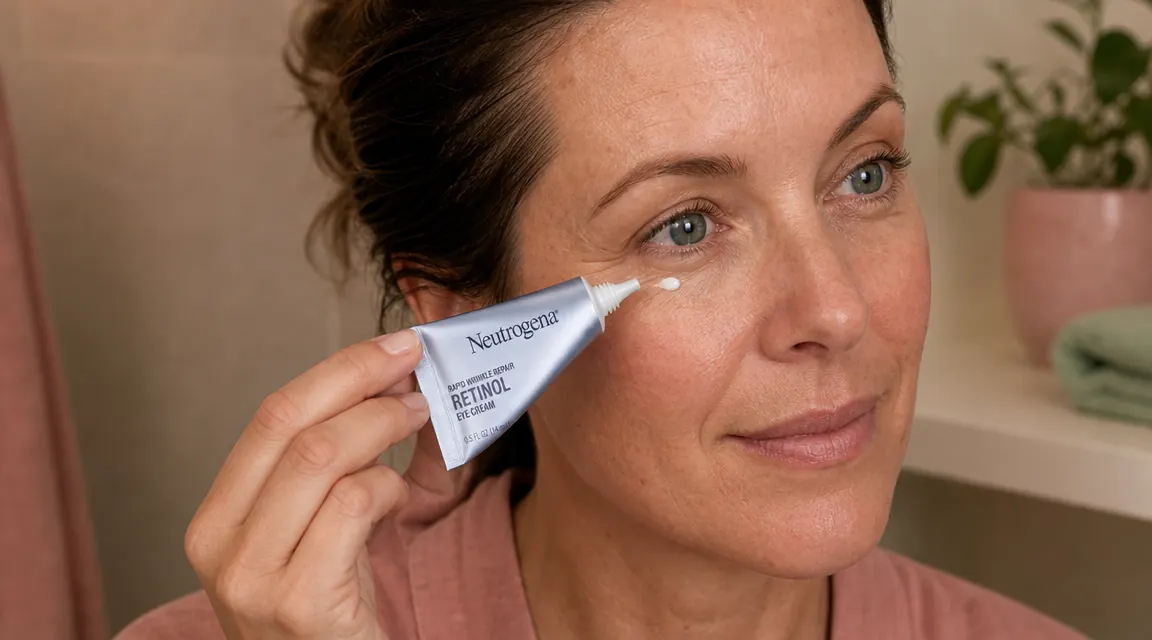
The biggest practical difference between these two creams comes down to how they deliver retinol to thin, delicate under-eye skin. Neutrogena uses a stabilized, encapsulated form of retinol that releases slowly after application. This is not a marketing claim, it is a formulation choice that matters because the skin around your eyes is significantly thinner and more reactive than the rest of your face. Encapsulated retinol is less likely to cause the stinging, flaking, and redness that often gets described as "retinol burn" in this area.
In my six weeks of testing, the Neutrogena formula caused zero irritation under either eye, including during the first week when retinol products tend to be harshest. The texture is a lightweight cream that sinks in quickly, which matters more than it sounds. A lot of eye creams sit on top of skin and migrate into eyes overnight, which causes puffiness and irritation by morning. The Neutrogena formula stayed where I put it.
By week four, I noticed a visible softening of the fine horizontal lines directly under my eyes. The skin also looked a bit plumper in the mornings, which I credit less to the retinol and more to the supporting moisturizing ingredients. The darkness did not disappear, but that is an honest expectation to set for any topical product.
Where RoC Wins
RoC Retinol Correxion Eye Cream uses what the brand calls a "phase-release" retinol system, which is designed to deliver retinol in stages throughout the night. The upside of this approach is that the total retinol activity over an eight-hour period may be higher than what you get from a single-application encapsulated product. For someone with thicker, more resilient skin who has already been using retinol elsewhere on their face, that extra potency can translate to faster visible results on deeper lines.
RoC also has a decades-long track record. The brand has been publishing peer-reviewed studies on retinol efficacy since the 1990s, and that history gives experienced retinol users a reason to trust the formula. If you are not new to retinol, have already built up tolerance on your face, and want to be more aggressive about crow's feet and deeper orbital lines, the RoC cream has a legitimate case.
The downside I observed is real: the formula sits on skin longer during absorption, and it caused mild flaking on my left orbital area by the end of week two. I reduced application to every other night, which helped, but at that point I was spending the same money for half the usage frequency. That tradeoff tips the scale toward Neutrogena for most people.
The skin around your eyes is thinner than anywhere else on your face. A formula that delivers retinol gently and consistently will always beat one that delivers it aggressively and forces you to take nights off.
Texture and Wearability: A Closer Look
Texture matters for eye cream in ways it does not for serums or moisturizers used on the rest of the face. Under-eye skin is thin and sits near a mucous membrane, which means anything that is too heavy, too slick, or too slow to absorb can migrate and cause problems. Both the Neutrogena and RoC creams are designed with this in mind, but they handle it differently.
Neutrogena has a lotion-like texture that absorbs in roughly 20 to 30 seconds when patted gently with a ring finger. It leaves a very slight sheen that fades completely within a few minutes. I applied it as my last step at night, and it did not transfer to my pillowcase or feel tacky by morning. Under makeup, it worked as a smooth base without pilling, which is an issue I have had with thicker eye creams.
RoC has a denser, more balm-like texture that feels richer going on but takes longer to absorb fully. Some users appreciate this as a sign of higher moisturization, and for skin that is particularly dry around the eyes, that richness may be welcome. Under concealer, though, I found it caused my under-eye concealer to crease by mid-morning, even after waiting two full minutes for it to set. That is not a dealbreaker for nighttime-only use, but if you plan to wear your eye cream in the morning as well, this is worth knowing.
Results Over Six Weeks: What Actually Changed
Being specific about what changed is more useful than vague claims about "looking more rested," so here is what I actually observed. On the Neutrogena side: the skin directly under my eyes, which had visible horizontal texture lines, was noticeably smoother by day 35. The crepiness that shows up under harsh lighting was reduced by what I would estimate as about 30 to 40 percent compared to my starting photos. The puffiness I sometimes get in the morning did not change noticeably, which is consistent with what retinol can and cannot do. Retinol supports collagen production and may help with skin texture over time, but it does not address fluid retention.
On the RoC side, my results were more mixed. By week five I did see a slight improvement in my crow's feet area, which are deeper lines that the Neutrogena formula was slower to affect. But the flaking I mentioned earlier forced me to reduce usage frequency, so I am not confident I gave the RoC formula a fully fair test at its intended every-night cadence. Someone with less sensitive orbital skin might see stronger results than I did.
The honest takeaway: both products work. The difference is not whether they work but which one you will actually use consistently without having to take irritation breaks. Consistent use over two to three months is what separates real retinol results from products that sit half-used in a drawer. Neutrogena wins that category clearly.
Who Should Buy Which
Buy the Neutrogena Rapid Wrinkle Repair Eye Cream if you are new to retinol around the eyes, have sensitive or reactive skin, wear concealer during the day and need your eye cream to cooperate with it, or want something you can use every single night without monitoring for irritation. It is the choice I recommend to most people who ask me which eye cream to start with, and it holds up well as a long-term option even after you build retinol tolerance.
Buy the RoC Retinol Correxion Eye Cream if you are already using retinol on your face regularly and have built up solid tolerance, have particularly resilient or oilier under-eye skin, want to target deeper crow's feet more aggressively, and are comfortable starting at every-other-night usage and slowly building up. It is a good product in the right hands, just not the right first product for most people.
On price, the two products are effectively equal. Checking current prices on Amazon before buying makes sense because promotional pricing fluctuates, and both brands run periodic discounts. The cost-per-use difference between them is minimal. What matters more is the usage frequency you can actually sustain without skin protest.
One Thing Both Products Cannot Do
Neither of these creams will erase dark circles caused by vascular pigmentation, which is the kind that looks purplish or blue through thin under-eye skin. That type of darkness is a structural feature, not a surface texture issue, and retinol does not address it. If your primary concern is that bluish darkness, you will get more visible results from a vitamin C or niacinamide eye product combined with consistent SPF use. Both the Neutrogena and RoC creams are much better suited for fine lines, texture, and mild surface discoloration from sun exposure.
This is not a criticism of either product, just an honest calibration of expectations. Retinol eye creams do specific things very well. Knowing what those things are before you buy helps you evaluate your results accurately and stay consistent long enough to see them.
For more on what to expect from nightly use and a closer look at the first three months with the Neutrogena formula specifically, the full long-term review covers the week-by-week picture in more detail. The honest review covers what other reviewers tend to skip, including the smell, the rare stinging reports, and realistic expectations for different skin tones.
Neutrogena is the one I would buy again. Here is where to check the current price.
After six weeks with both, the Neutrogena Rapid Wrinkle Repair Eye Cream is the more consistent performer for everyday use. Lighter texture, lower irritation risk, and results that show up by weeks four and five when you use it nightly.
Amazon Check Today's Price on Amazon →