
Here is the thing about a product with 27,000 reviews averaging 4.6 stars: people who had a perfectly smooth experience leave glowing reviews. People who had a confusing, bumpy, or disappointing experience often do not leave reviews at all. They just stop using the product and assume retinol is not for them. The CeraVe Anti Aging Retinol Serum is genuinely one of the better-formulated drugstore retinol serums available right now. I am not here to bury it. But the things most reviews skip over are exactly the things that determine whether you stick with it long enough to see results.
I spent years as a licensed esthetician before going independent, and the most common retinol questions I still get are not about which serum to buy. They are: why is my skin breaking out worse than before I started, why does it smell like that, is it normal that I cannot use my vitamin C anymore, and why did it seem to stop working after two months. All of those questions apply to this serum specifically. Let me answer them plainly.
The Quick Verdict
A well-formulated, genuinely tolerable entry-level retinol. The honest catch: it demands patience through a confusing first six weeks before the payoff arrives.
Amazon Check Today's Price →If retinol has irritated you before, the encapsulated formula in this serum is the most important reason to try again.
The CeraVe Anti Aging Retinol Serum pairs encapsulated retinol with three ceramides and niacinamide at a price point that makes the experiment low-risk. Over 27,000 Amazon ratings average 4.6 stars.
Amazon Check Today's Price on Amazon →The Purging Phase: What Nobody Warns You About
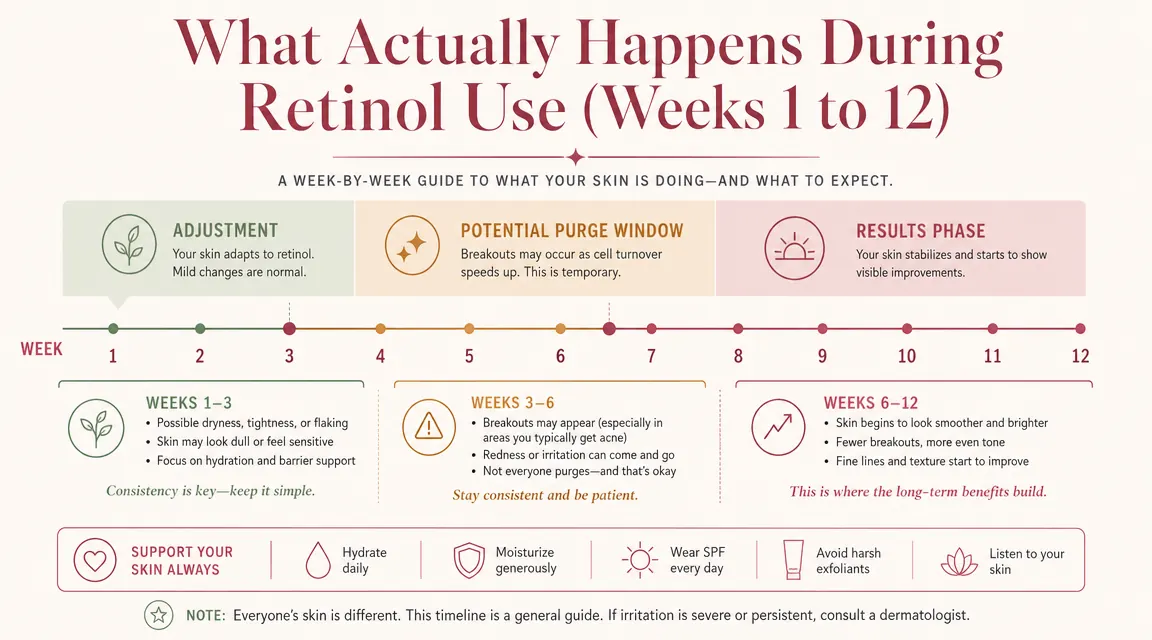
Retinol speeds up skin cell turnover. Faster turnover means whatever is sitting in your pores gets pushed to the surface more quickly than it would have on its own. For people with any subclinical congestion, closed comedones, or hormonal activity under the skin, this can look like a sudden breakout in weeks three through five. It is not the serum causing new blemishes. It is clearing existing ones faster than your skin would have on its own. This is called purging, and it is one of the most misunderstood parts of starting any retinol.
With the CeraVe specifically, the encapsulated delivery system slows this process down compared to direct-release formulas. Some people never experience it at all. But if you are prone to congestion, especially along the jawline or cheeks, expect a possible window between weeks three and six where your skin looks worse than it did before you started. If that happens and you quit, you will never see the results that would have arrived in weeks seven through ten. The threshold is real, and most reviews that call this serum ineffective were probably written during that window.
True purging is localized to areas where you already break out. If you are seeing new irritation across your entire face, including areas that have never broken out for you, that is a reaction to the retinol, not purging. Those are two different things. Purging is survivable with moisturizer and patience. A true reaction means you should stop and wait a few weeks before trying again at a lower frequency.
About That Smell
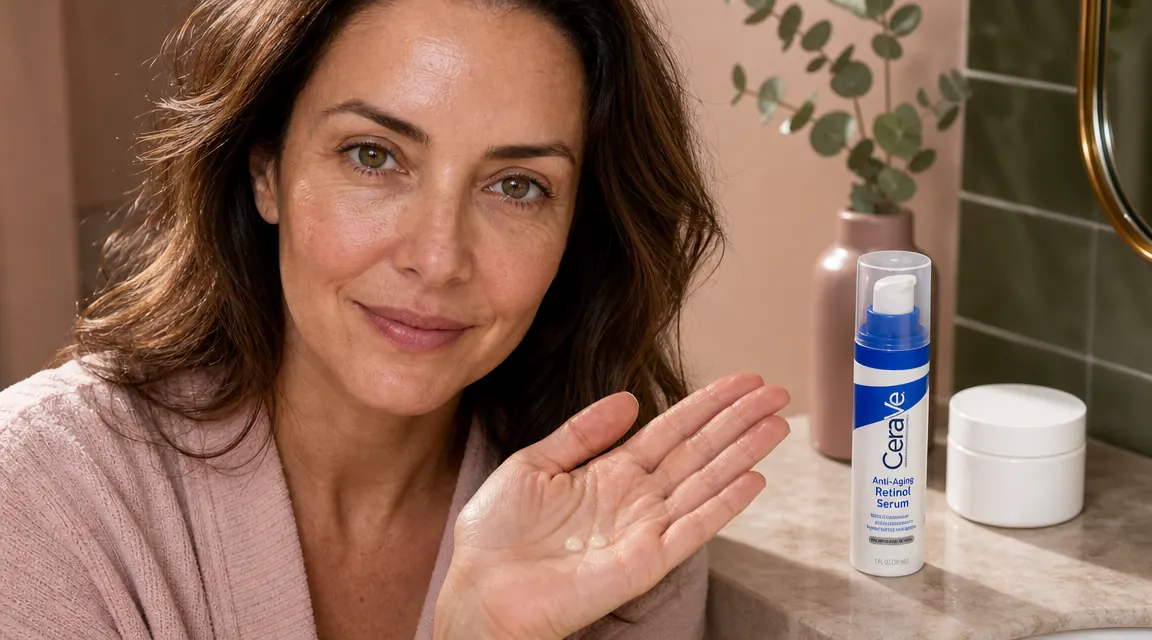
Yes, it has a smell. Faint, brief, and clinical, something between a mild chemical and a very diluted vitamin smell. It fades within thirty seconds of application. If you are applying it in a steamy bathroom at night, you will barely notice it. If you apply it immediately after a shower in an enclosed space and put your face close to your palm, it is more noticeable. CeraVe does not add fragrance to this formula, which is the right call for a product that stays on your skin all night. The smell is the retinol itself, not added scent.
I have tested retinol serums from La Roche-Posay, SkinCeuticals, and several smaller brands. All of them have some version of this smell. It is not a sign of a problem with the formula and it does not linger on a pillow or partner. Worth knowing before your first application so it does not alarm you, but not worth letting it factor into your decision.
The Vitamin C Question and Other Layering Pitfalls
The most common mistake I see with retinol serums is layering them with actives that compete or conflict on the same application. Vitamin C serum, which many people apply at night, is the biggest one. Vitamin C is most stable at a low pH. Retinol works best in a neutral pH environment. Applying them together can reduce the effectiveness of both and increase irritation risk significantly. If you use a vitamin C serum, move it to your morning routine and let your nighttime routine belong to retinol exclusively. That is the simplest fix and it immediately reduces the chance that your skin reacts badly.
The same principle applies to AHAs and BHAs. Glycolic acid, lactic acid, salicylic acid: these are exfoliants that are already doing a version of what retinol does at the cellular level. Using them on the same nights as your retinol does not double the results. It doubles the disruption to your skin barrier. If you use exfoliating acids, alternate nights with your retinol rather than combining them. Your skin will thank you by week four.
One thing that does layer well with this serum: a plain, fragrance-free moisturizer applied two to three minutes after the serum has absorbed. CeraVe's own Moisturizing Cream or Facial Moisturizing Lotion work well since the ceramide profiles complement each other. The serum does not pill, does not ball up under moisturizer, and does not feel heavy or occlusive. That part of the experience is genuinely smooth.
Why Reviewers Say It Stopped Working
Retinol does its most significant work in the first ten to twelve weeks of consistent use. After that, results maintain rather than accelerate. That is normal. It is not the serum failing. It is the serum doing exactly what it is supposed to do.
A significant portion of the lower-star reviews follow a pattern: the person saw real results in months two and three, then felt like the serum plateaued and stopped delivering. They interpret this as the product losing efficacy or their skin adapting to it. Neither is exactly what is happening. Retinol's most visible surface changes, improved texture, more even tone, softened fine lines, happen during the initial period of accelerated cell turnover. After twelve or so weeks of consistent use, cell turnover normalizes at a healthier rate. The improvements hold, but the dramatic week-over-week progress slows.
This is not the serum failing. It is the serum doing its job and then maintaining the result. The comparison I use with clients is dental care: you do not stop brushing once your teeth are clean because the brushing stopped working. You brush to maintain what you built. Retinol is similar. The first twelve weeks build the improvement. Continued use preserves it. If you want to keep progressing beyond that baseline, you typically need to step up to a higher concentration, which is a separate conversation and one best had with a dermatologist.
For a detailed look at exactly how CeraVe's formula compares to Paula's Choice Retinol on both concentration and long-term use experience, see the head-to-head in the CeraVe Retinol Serum vs Paula's Choice Retinol article.
How Much to Use and How Often
Most people use too much. One pump, maybe two, is enough for your entire face and neck. When you apply more than that, you are not getting more benefit. You are increasing the likelihood of irritation without additional payoff. The serum should feel like a very light layer after pressing it into your skin, not a noticeable coating. If your skin feels shiny or tacky after the serum but before moisturizer, you have used too much.
Frequency is the other variable people mismanage. If you are new to retinol, starting every night is too aggressive. Three nights a week for the first three to four weeks, then building to five nights, then nightly if your skin tolerates it, is a much more sustainable path. The encapsulated delivery in this serum is more forgiving than direct retinol formulas, but daily use from day one is still the most common reason beginners experience unnecessary irritation and quit. Build slowly. The finish line is the same either way.
The Niacinamide and Ceramides: Are They Window Dressing?
A fair skeptical question: is the niacinamide and ceramide content meaningful at the concentrations CeraVe uses, or is it marketing? My honest read, based on the formula and on twelve weeks of personal use, is that the ceramides make a real functional difference. They help maintain the moisture barrier that retinol temporarily disrupts during turnover. People who have tried retinol-only serums and experienced barrier disruption, that tight, papery skin feeling in the mornings, will notice its absence here. The ceramides are doing work.
Niacinamide is a trickier question. At two to five percent concentrations it has solid evidence for reducing redness and supporting even skin tone. CeraVe does not publish the exact percentage in this formula. My subjective read after sixteen weeks was that my skin tone was more even at the end, but I cannot separate the niacinamide contribution from the retinol contribution with confidence. What I can say is that the combination produces no irritation conflict, which is worth something: some formulations that include both retinol and niacinamide can develop niacin flush in some skin types, and this one did not, at least not on mine.
What I Liked
- Encapsulated retinol meaningfully reduces irritation risk compared to direct-delivery formulas
- Ceramides help maintain barrier function through the turnover phase, preventing that tight, papery morning feeling
- Lightweight texture absorbs fully before moisturizer, no pilling or residue
- Night-only use is simple to build into an existing routine
- One of the lowest entry prices for a properly structured retinol serum
- Strong track record across a wide range of skin types in real reviewer data
Where It Falls Short
- Slower visible results than standard-delivery retinol, which requires more patience and commitment
- Purge window in weeks three through six catches many first-time users off guard and drives early dropouts
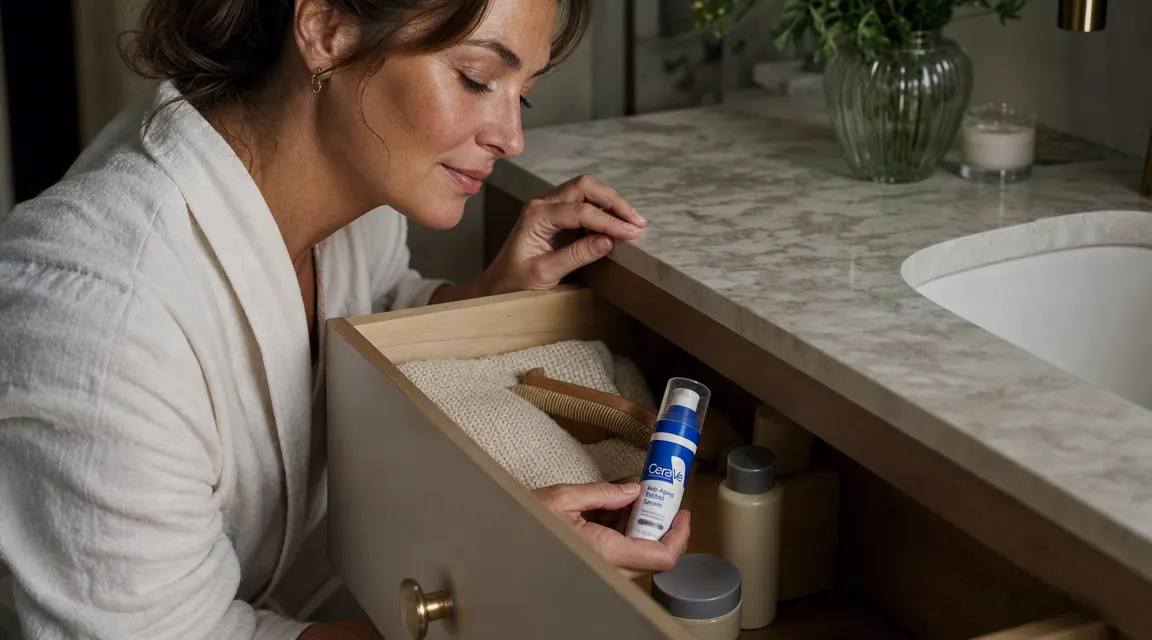
- Bottle is not fully opaque and should be stored in a drawer, not left on an open countertop
- The brief clinical smell on application is noticeable even if it fades quickly
- Not a strong pick for anyone already comfortable with higher-concentration retinol who wants to maintain advanced results
What the One-Star Reviews Actually Say
I read through several pages of one and two-star reviews before writing this. The patterns are instructive. The most common complaints: breakouts in the first few weeks (almost always purging, not a true reaction), the serum stopped working after two months (the plateau I described above), and the smell. A smaller cluster involves skin that simply does not tolerate retinol in any form, encapsulated or not. Those are legitimate cases and those people are right to stop using it.
What is notably absent from the critical reviews: complaints about the formula being ineffective when used correctly over a full twelve-week period. Almost no one who completed a full course of consistent, properly layered, correctly dosed use concluded that this serum does nothing. The product works when used as it is meant to be used. The reviews suggest the bigger problem is that instructions for how to use retinol successfully are not printed on the box.
Who This Is For
This serum is the right starting point for anyone who wants to introduce retinol for the first time and does not want to risk six weeks of irritation to find out if their skin can handle it. It is also well suited for people who tried a different retinol once, had a bad purge or reaction, and gave up on the ingredient entirely. The encapsulated format genuinely changes the experience for reactive skin. People with combination or oily skin, sensitive skin, or those dealing with uneven tone or early texture changes will find this formula useful and approachable. For a longer look at how my skin responded across four months of nightly use, the CeraVe Retinol Serum long-term review covers the week-by-week detail.
Who Should Skip It
If you are using prescription tretinoin or have been on a 0.5 percent or higher OTC retinol for more than a year and are maintaining strong results, this serum will feel like moving backward. The encapsulated, lower-irritation delivery is a tradeoff that experienced retinol users do not need. Skip it if your skin is currently in an active flare of eczema, rosacea, or any open barrier disruption. Retinol of any kind will worsen an already compromised barrier. And skip it if your primary concern is acne rather than texture or tone, because retinol is not the most efficient path to acne control compared to dedicated actives like benzoyl peroxide or adapalene.
You will not know if retinol works for your skin until you get through week six. This is the formula that makes it worth finding out.
The CeraVe Anti Aging Retinol Serum is one of the most consistently reviewed drugstore retinol serums on Amazon. Over 27,000 ratings, 4.6 stars, and a price that makes it a low-risk experiment for first-timers.
Amazon Check Today's Price on Amazon →