
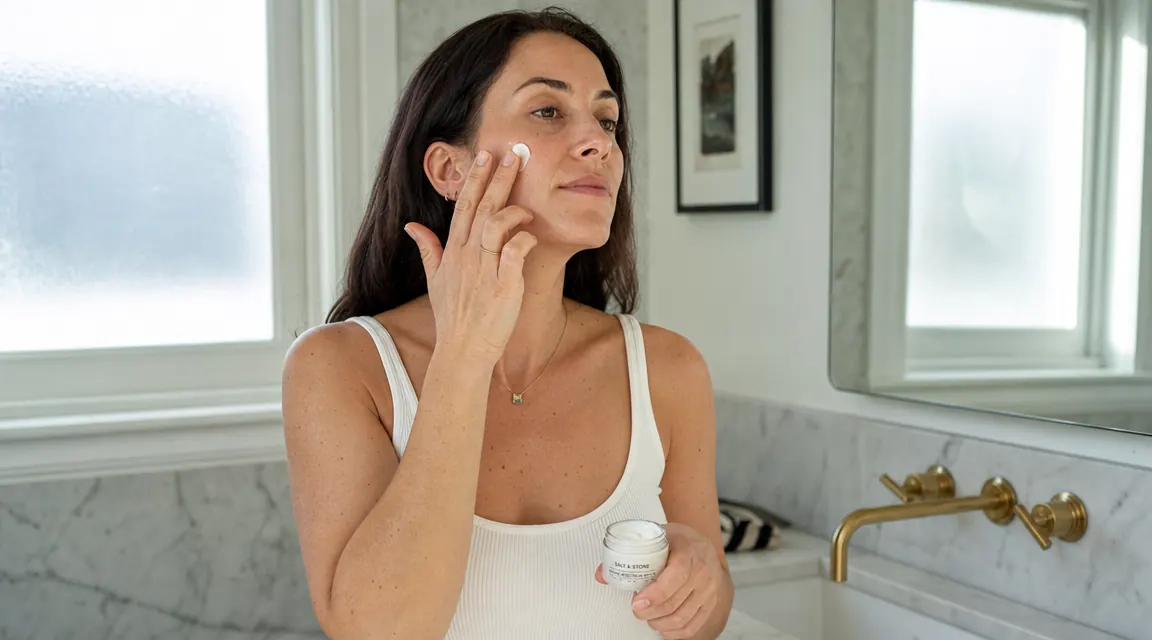
For the first three years I worked the treatment room at a medical spa, I had a standing argument with myself about sunscreen. I knew, professionally, that SPF is the single most important step in any daytime routine. And then I would get home and skip it because the options I could actually afford left my combination-skin face greasy by 10 a.m. or chalky in photos. I tried the CVS shelves, the European imports, the tinted mineral options. Something always failed. Then a client who spent a lot of time outdoors for work mentioned she had been wearing EltaMD UV Daily SPF 40 every single day for four years and had never once gone back to anything else. I picked up a bottle. Six months later, I am still using it as my only morning product after cleanser.
This is a long-term use review. I am not comparing it to the dozen other sunscreens I have tested, and I am not writing this after two weeks. Six months of daily wear across a Chicago winter into spring gives you a very clear picture of what a product actually does. I want to cover the finish, the feel under and without makeup, how it behaves across the seasons, what the ingredient story actually means, and whether the price is justified for people who are not already SPF obsessives. I will also tell you who should not bother with it.
The Quick Verdict
EltaMD UV Daily SPF 40 earns its reputation. It is the rare face sunscreen that disappears into skin without white cast, sits beautifully under makeup, and works as a standalone moisturizer for normal-to-combination skin. The price is real, and it is not the right call for very dry or dark-toned skin. For everyone else, it is genuinely hard to beat for daily wear.
Amazon Check Today's Price →Still washing off a chalky SPF before noon? UV Daily is built for faces, not beach days.
Over 43,000 Amazon reviewers have made EltaMD UV Daily one of the most consistently rated face sunscreens available. Check today's price and see current availability before your next order.
Amazon Check Today's Price on Amazon →How I Have Used It Over Six Months
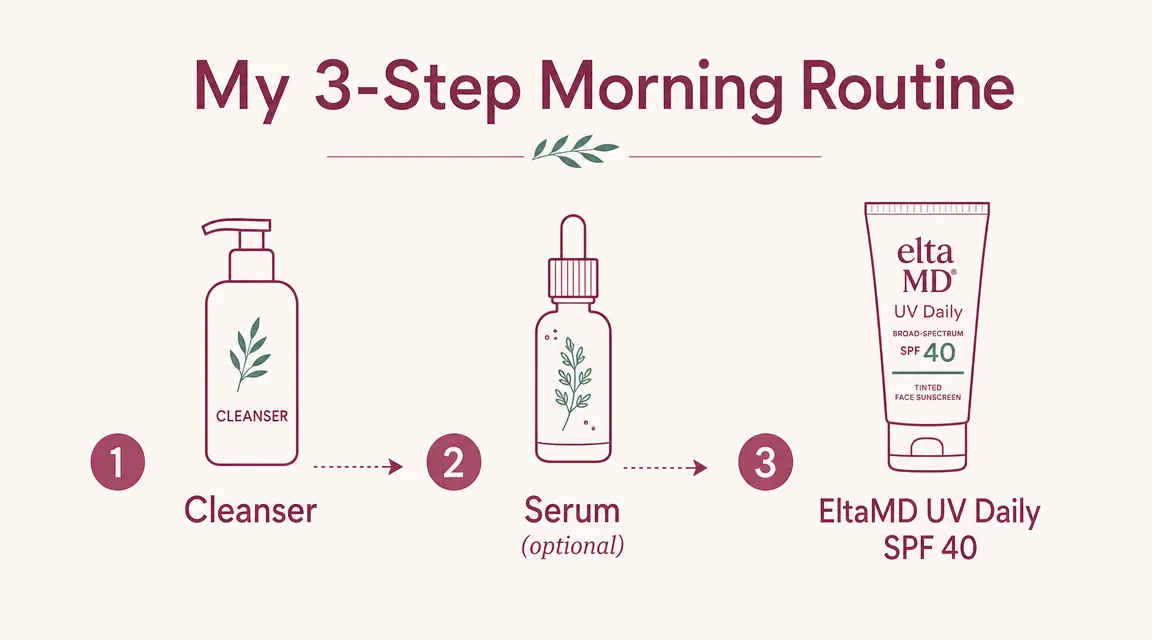
My routine during this test period was intentionally stripped down. Cleanser, then EltaMD UV Daily applied immediately after, nothing else in the morning except occasionally a tinted lip balm. I wanted to understand what the sunscreen could do on its own, without layering a separate moisturizer underneath. My skin type is combination: slightly oily through the T-zone, normal to dry along the cheeks and jaw. I live in an urban environment, commute on foot, and spend about 45 minutes outdoors most days. In winter I added a hydrating serum underneath on particularly dry days, but most mornings this was the only step.
I applied roughly two finger-lengths each morning, which is the standard amount for facial SPF to perform at its rated protection. One bottle of EltaMD UV Daily lasted me almost exactly eight weeks at that usage rate, which works out to about a dollar a day. I bought five bottles over the course of the six months, always the same 1.7 oz size, always the untinted version. I reapplied at midday on weekend days when I was outside for more than two hours.

What Is Actually in This Sunscreen
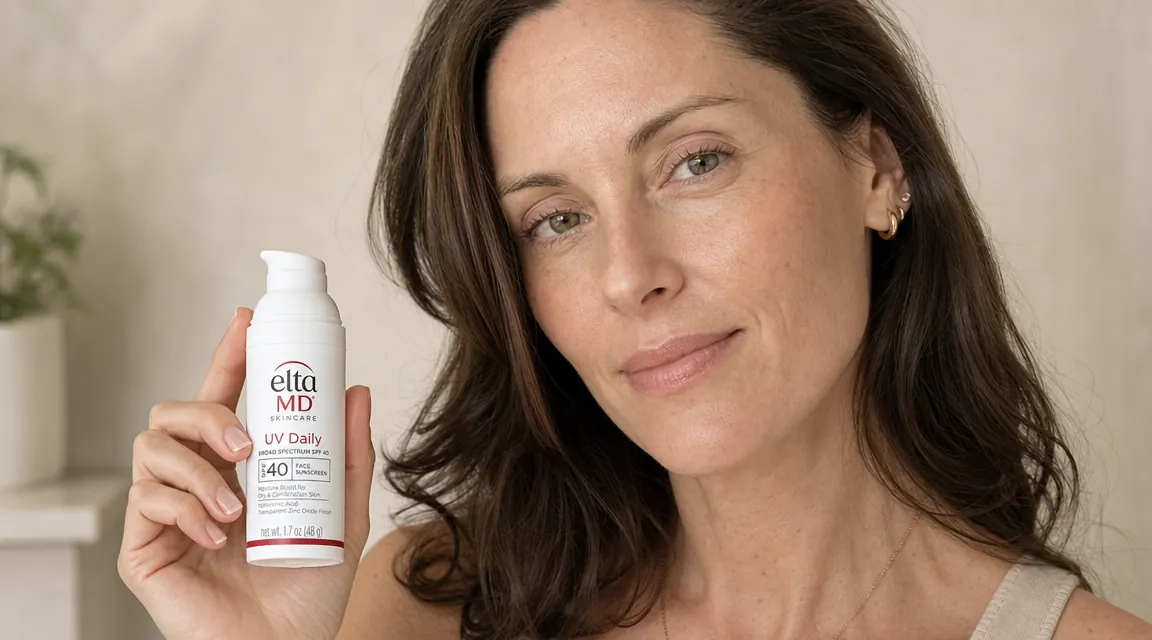
EltaMD UV Daily uses a hybrid protection system: 9% zinc oxide for physical UVA blocking, combined with octinoxate for UVB coverage. This is not a pure mineral sunscreen, which means it will not suit everyone. But it is also not a pure chemical formula, which is why the white cast is so minimal compared to a full-mineral SPF. The zinc concentration is low enough to blend fully into light-to-medium skin tones without leaving residue.
Beyond the actives, the formula includes hyaluronic acid for surface hydration and a handful of skin-conditioning agents that give it enough slip to double as a lightweight moisturizer. This is the reason dermatologists often recommend it as a one-step morning product for patients who complain that their routines are too complicated. It is not a thick, occlusive moisturizer. If your skin is genuinely dry rather than just normal-to-combination, you will want to layer something underneath.
The formula is fragrance-free, paraben-free, and noncomedogenic. After six months of daily use, I have not experienced a single closed comedone I could attribute to it. My combination skin did not get more congested. That is genuinely meaningful for a product that also claims to moisturize, because many moisturizing SPFs clog pores on people who are already prone to blackheads.
The Finish, the Feel, and How It Sits Under Makeup
The texture is a smooth, lightweight lotion. It is not a gel, not a serum-like fluid, not a stick. It pumps out white and blends to a satin-matte finish within about thirty seconds of application. On my combination skin, I had zero midday oil breakthrough in the T-zone even on humid days. On very dry winter days it was just slightly less comfortable without a serum underneath, but still wearable.
Under foundation and tinted moisturizer it performs consistently. I tested it under a buildable liquid foundation on a week when I had video calls, and under nothing on the days I was working from home. Both scenarios worked. The one thing I will flag: you need to let it sit for about ninety seconds before applying makeup. If you go in immediately with a brush or sponge it can pill slightly at the corners of the mouth and around the nose. Ninety seconds of setting time and that issue disappears entirely.
After six months of daily use, I have not experienced a single clogged pore I could attribute to this formula. That is not something I can say about most moisturizing SPFs I have tested.
The pump mechanism is one of the best on any SPF I have used. It dispenses a consistent amount, does not drip, and does not require excessive force. This sounds minor, but when you are trying to apply the right quantity at 7 a.m. without making a mess, a good pump matters.
How It Held Up Over Six Months, Season by Season
I started this test in late November. The first two months were Chicago winter, which means dry furnace-heated indoor air and single-digit temperatures outdoors. During this stretch I did add a hydrating serum about three days a week, because the UV Daily alone was not quite enough moisture for my cheeks when the humidity inside was below 30 percent. This is not a mark against the product. It is a thin sunscreen, not a barrier cream. But it is worth knowing.
March through April, as the weather got warmer and more humid, I dropped the serum entirely. The UV Daily was enough on its own. No adjustment was needed. By May, when I was spending more time outdoors for longer stretches, I got into the habit of a midday reapplication using a setting-spray SPF over makeup, because no face sunscreen offers all-day protection with a single morning application. That is not an EltaMD limitation. That is just how SPF works.
The Skin Changes I Noticed Over Time
I want to be careful here because sunscreen does not dramatically transform your skin in six months. What daily SPF does is prevent damage that compounds over years. That said, I did notice a few things. My skin tone looked more even at the four-month mark compared to where I started, which I attribute to blocking the kind of ambient UVA exposure that contributes to uneven pigmentation over time. I also noticed my pores looked slightly smaller, which I think is related to the consistent hydration from the hyaluronic acid and possibly from not putting heavier products on top of my skin every morning.
My skin texture was consistent throughout. I did not experience the kind of buildup or dullness that some mineral SPFs cause when they do not rinse cleanly at night. The UV Daily breaks down easily with my usual cleanser, even a gentle non-foaming one. No residue, no leftover white cast after washing.
Where EltaMD UV Daily Falls Short
The price is the most obvious concern. At the current price on Amazon, this is a meaningful skincare investment. There is no pretending otherwise. If you are on a tight budget or just want to wear SPF without spending more than ten dollars a month, the UV Daily is not the product for you. Drugstore options like the CeraVe AM Facial Moisturizing Lotion with SPF 30 do a reasonable job for a fraction of the cost, even if the finish is not as elegant.
The 9% zinc oxide, while low compared to full mineral formulas, may still leave a subtle grayish cast on medium-deep to deep skin tones. I have light-medium skin and see no cast at all. Friends with deeper skin who tried my bottle noticed a slight dulling effect. If your skin tone is Fitzpatrick IV or darker, I would test a sample before committing to a full bottle. The EltaMD UV Elements, which uses titanium dioxide only and is available tinted, may be a better fit.
The moisture level, as I mentioned, is light. If your skin is dry to very dry, this will not be enough on its own in winter. You will need a moisturizer underneath, which adds time and cost to your morning routine and somewhat defeats the appeal of a one-product approach.
What I Liked
- Disappears into light-to-medium skin tones with no white cast or gray finish
- Comfortable enough to wear as a standalone moisturizer on normal-to-combination skin
- Noncomedogenic after six months of daily use on combination skin
- Excellent pump mechanism for consistent dosing
- Fragrance-free and paraben-free, minimal irritation risk
- Sits beautifully under foundation with a 90-second setting window
Where It Falls Short
- Expensive at the current Amazon price per 1.7 oz bottle
- Hybrid zinc-octinoxate formula is not suitable for those who want pure mineral protection
- May leave subtle grayish cast on deeper skin tones
- Too light to serve as a standalone moisturizer for dry or very dry skin
- Requires reapplication midday for extended outdoor use, like any SPF
Who This Is For
EltaMD UV Daily is the right choice if you have normal, combination, or oily skin, fall into a Fitzpatrick I through III skin tone range, and you are tired of hunting for an SPF that does not pill under makeup or leave you looking like you applied it with a spatula. It works especially well for anyone who wants to simplify their morning routine to the fewest possible steps. One bottle replaces your moisturizer and your sunscreen, which is meaningful if you are the kind of person who finds a long routine hard to stick to. It is also a strong pick if you are in your late twenties to forties and want to be consistent about daily sun protection without dealing with a product that fights back every time you apply it.
Who Should Skip It
Skip EltaMD UV Daily if your skin is dry to very dry and you want one product that genuinely does all the moisture work. You will need to layer, which changes the math on cost and convenience. Skip it if you prefer a pure mineral formula without any chemical actives. Skip it if you have medium-deep or deep skin, at least until you can test a sample, because the zinc may not blend invisibly for your tone. And skip it if $41 for a 1.7 oz bottle feels like too much to spend on SPF right now. There are good drugstore alternatives. They just require more effort to find one that works as elegantly under makeup.
If you want to compare it against another dermatologist-recommended face sunscreen before deciding, my full head-to-head between UV Daily and La Roche-Posay Anthelios is worth reading. Both are strong products that fail in different situations. And if you are still on the fence about whether daily SPF is worth the habit at all, the reasons daily face sunscreen prevents long-term skin damage may push you off it.
Six months in, I buy another bottle every time. It is not the cheapest option but it is the one I keep going back to.
EltaMD UV Daily SPF 40 has over 43,000 Amazon ratings and a 4.6-star average. Check today's price and availability to see if it fits your routine.
Amazon Check Today's Price on Amazon →